It's always exciting when a new scene is discovered in a country. Whether it be Taiwan, the UK, Czech Republic or Denmark, media and the industry just love to be able to bunch films together by style. The stark reality of Belgium and the kitchen sink dramas of the UK are just two examples. Over the past few years, Denmark has been the source of interesting films that manage to find commercial audiences. The figures for domestic films are remarkable: in the first six months of 2007, over 1.8 million tickets were sold - one half million more than the same time last year - and fully one-third of those were for Danish films.
But the inevitable downside of a scene is the almost irresistible temptation to apply a formula. An awful lot of money is involved, so why not hedge your bets by following previous successes? In an article in the Copenhagen Post, Claus Ladegaard of the Danish Film Institute, said the Danish industry was definitely in a crisis and may have rested too heavily on its earlier laurels. ‘We probably should have looked more critically at our own success a bit sooner,’ he said. ‘Often, as soon as someone discovers a particular way to make a film successful, others follow and then movies start resembling one another.’
It's a danger that exists already at the writing stage. All the writers with a few pages of sub-"Pulp Fiction" know what I'm talking about. But trying to second guess what producers and audiences will like is dangerous. The throughput time from paper to screen is so long that whatever trend was discernible will be totally outdated by the time it would take to write and shoot it.
For more about the Danish hangover, check the Copenhagen Post. For news about Danish film, visit the Danish Film Institute.
Monday, July 23, 2007


Tuesday, July 17, 2007
Louis Gardel: a scriptwriter controls nothing
Veteran scriptwriter Louis Gardel ("Indochine" and "Himalaya" as well as massive amounts of stories for French TV) gives a few sobering thoughts when explaining his work methods for the Cineuropa website: "I’ve understood very well that a scriptwriter controls nothing at all and that, for the result to be good, for the film to measure up to what I dreamt, someone “strong” has to do it. I’m very attentive to that".
Gosh man, do you have to say it so loud? Someone might hear you. He does, however, have a point. Scriptwriting is an in-betweeny thing to do, as the ultimate calls are taken by the director (in Europe) and the producer.
Now that I've given you the bad news, check out the whole article for some interesting insights on Cineuropa.
Gosh man, do you have to say it so loud? Someone might hear you. He does, however, have a point. Scriptwriting is an in-betweeny thing to do, as the ultimate calls are taken by the director (in Europe) and the producer.
Now that I've given you the bad news, check out the whole article for some interesting insights on Cineuropa.
Monday, July 16, 2007
"California Dreamin'" sways Brussels

Cristian Nemescu's "California Dreamin'" (co-written with Tudor Voican) was the clear overall winner in the recent Brussels European Film Festival, picking up awards as Best Film, the Audience favourite and an award from TV channel Canvas. Producer Andrei Boncea picked up the awards in the absence of the director, who tragically died in a car accident during post-production. Another noted winner was Gabriel Range's "Death of a President".
The festival also runs a pitching competition, this time won by Spain's Susana Lopez Rubo for "You Can Change Your Life in Ten Seconds" and Belgium's Robert Scarpa for "Délocalisé".
for the full list of winners, visit the BEFF.
Friday, June 15, 2007
European fest to kick off in Brussels

Brussels 5th European Film festival will kick off on June 29, running until July 7. Belgium, like most European countries already has a busy line-up of film festivals. The Brussels event stands out by focussing on first or second features from European directors. Amongst those being shown this year are "The Art of Crying" by Peter Schonau Fog on a script by Bo Hansen, "Voleurs de chevaux/Horse Thieves" by Micha Wald on a script by Jean-Paul De Zaeytijd and "Does it Hurt (The First Balkan Dogma)" by Aneta Lesnikovska. Seven avant-premieres have been set up and Belgium's Cinémathèque will be showing some pearls from its vaults on the square facing the venue.
The festival will also be handing out an award in its second pitch contest. More details will follow closer to the day.
For full details in French, Dutch and English, visit European Film Festival.
Tuesday, June 12, 2007
UK's Screenwriter Festival posts programme

This year's Screenwriter Festival in Cheltenham, July 3-6, has an exciting programme that has been split into two broad sections. The two-day Rising Talent section will focus on issues of most interest to writers trying to break into the sector. Agent Julian Friedmann, Tony Jordon (writer of "Life on Mars"), reps from the BBC's Writers Room and William Nicholson ("Gladiator") are amongst the many speakers. The second "pro" section features a script market, Michael Goldernberg (the latest "Harry Potter"), a section on Spanish cinema and Simon Oakes, CEO of Hammer Films on the re-launch of the studios.
For more details, visit Screenwriter's Festival.
Monday, May 28, 2007
Cannes 2007: Script award for Fatih Akin

Already one of the darlings of Germany's new cinema, Fatih Akin has picked up the screenplay award at Cannes for "The Edge of Heaven/Auf der anderen seite/Yasamin kiyisinda" as well as picking up the award from the Ecumenical Jury. Why three titles? Because Fatih Akin is a German of Turkish descent who has taken another look at the lives of people affected by the two countries. His first film, "Head On", was already an uncompromising quest for identity. He followed it with "Crossing the Bridge", a commendable documentary about musicians in Istanbul. He says of the characters in "The Edge of Heaven", that "they reflect a part of me, something that changes every day, because I change my mind every day. And I was inspired by the people I met during my trip to Turkey for 'Crossing the Bridge', people who are trying to change the world with music. Activism and political passion can be very sexy."
For the full interview, see Cineuropa. For the official site of "The Edge of Heaven" (in Turkish).
Monday, May 07, 2007
"Grave Decisions" picks up German script award

Germany has just dished out its Lola awards for local movies. The country has been on an upward swing for 10 years, when "Run, Lola, Run" opened a series of remarkable movies including "Goodbye Lenin" and more recently "Downfall" and "Other People's Lives". Perhaps not coincidentally, the awards are called Lolas, and in the latest ceremony "Grave Decisions" picked up awards for the best direction (Marcus H . Rosenmueller) and best screenplay (Marcus H . Rosenmueller and Christian Lerch) as well as picking up a joint Silver Lola with "Perfume: The Story of a Murderer".
"Grave Decisions/Wer früher stirbt, ist länger tot" is a comedy produced by Roxy Film in Bavaria, following a young boy whose mother died at his birth. When he later realises this, he tries to find a new wife for his father. It works, except that the new love is already married.
Interestingly, this is a first feature for both Rosenmueller and Lerch (who is also a noted sound designer). Check the official site in German.
The full list of Lolas:
Best Film - Gold Lola:
Four Minutes by Chris Kraus
Best Film – Silver Lola:
Perfume: The Story of a Murderer by Tom Tykwer and Grave Decisions by Marcus H . Rosenmueller
Best Children's Film:
Hands Off Mississippi by Detlev Buck
Best Documentary Director:
Workingman's Death by Michael Glawogger
Best Actress:
Monica Bleibtreu (Four Minutes)
Best Actor:
Josef Bierbichler (Winter Journey)
Best Supporting Actress:
Hannah Herzsprung (Life Actually)
Best Supporting Actor:
Devid Striesow (The Counterfeiter)
Lifetime Achievement: Armin Mueller-Stahl
Best Director:
Marcus H . Rosenmueller (Grave Decisions)
Best Screenplay:
Christian Lerch, Marcus H. Rosenmueller (Grave Decisions)
Best Cinematography:
Frank Griebe (Perfume: The Story of a Murderer)
Best Editing:
Alexander Brenner (Perfume: The Story of a Murderer)
Best Production Design:
Uli Hanisch (Perfume: The Story of a Murderer)
Best Costume Design:
Pierre-Yves Gayraud (Perfume: The Story of a Murderer)
Best Score:
Gerd Baumann (Grave Decisions)
Best Sound Design:
Stefan Busch, Dirk Jacob, Michael Kranz, Frank Kruse, Matthias Lempert, Hanse Warns, Roland Winke (Perfume: The Story of a Murderer)
Wednesday, May 02, 2007
UK event investigates the "dark art" of script development
Script development is often the subject of debate in Europe, usually followed by the claim that there is not enough of it. But what does it entail? A UK event will look at what they call the "dark art" of script development. I quote: "Who are these people who have been granted the right to fiddle with our scripts? And what is the dark magic they practice? Great script development can free a potentially brilliant script from the snags that are holding it back but for many writers and directors it remains a frustrating enigma.
An evening of questions and answers with two of the most respected script executives in the country Dan MacRae and Sarah Golding. Don't think about writing another script until you've heard what they have to say.
Dan was formerly Deputy Head of the Development Fund at the UK Film Council and an Executive at Working Title. His credits include RED ROAD and the forthcoming ATONEMENT.
Sarah is currently Head of Development for Potboiler Productions and was previously Head of Development for Skreba Films, Development Manager at Zenith Productions and Script Consultant for Yorkshire Television and Fair Game Films. Her credits include THE CONSTANT GARDENER, DEEP WATER, BROTHERS OF THE HEAD and the forthcoming THE BEST TIME OF OUR LIVES".
Date: Wednesday 9th May
Time: Doors and bar open at 6.30pm, event from 7.30pm
Venue: Lighthouse, 28 Kensington Street, Brighton, BN1 4AJ
Cost: £5/£4 concs Lighthouse’s Digital Lounge. Spaces are limited. Reservations at info@lighthouse.org.uk.
An evening of questions and answers with two of the most respected script executives in the country Dan MacRae and Sarah Golding. Don't think about writing another script until you've heard what they have to say.
Dan was formerly Deputy Head of the Development Fund at the UK Film Council and an Executive at Working Title. His credits include RED ROAD and the forthcoming ATONEMENT.
Sarah is currently Head of Development for Potboiler Productions and was previously Head of Development for Skreba Films, Development Manager at Zenith Productions and Script Consultant for Yorkshire Television and Fair Game Films. Her credits include THE CONSTANT GARDENER, DEEP WATER, BROTHERS OF THE HEAD and the forthcoming THE BEST TIME OF OUR LIVES".
Date: Wednesday 9th May
Time: Doors and bar open at 6.30pm, event from 7.30pm
Venue: Lighthouse, 28 Kensington Street, Brighton, BN1 4AJ
Cost: £5/£4 concs Lighthouse’s Digital Lounge. Spaces are limited. Reservations at info@lighthouse.org.uk.
Tuesday, May 01, 2007
European movie houses to award European movies at Cannes

I've always thought that the discussions about scriptwriting should be opened more towards other players in the chain. The people that run movie houses, for example, are never included. But at the end of the day, they are the ones that decide to run a movie and eventually decide to pull the plug!
So I was interested to learn that a network of European movie houses has been awarding prizes to European films at Cannes and other festivals for four years already. Once again, it will be awarding its Label prize to the best European film in the Directors’ Fortnight/Quinzaine des Réalisateurs section.
A jury of four Europa Cinemas exhibitors will award the Label at Cannes, with the winning film receiving the invaluable support of extended theatrical exposure and additional promotion from the Europa Cinemas network. Previous winners have included 12 :08 East of Bucharest / A Fost sau n-a fost?, Live and Become / Va, Vis et Deviens and more recently Spain's Camino de los ingleses/Summer Rain at the Berlinale. To find out more, click the logo above
Sunday, April 29, 2007
Crossing Europe awards

The Austrian festival that features a strong East European slant gave its awards this weekend. Director Pia Marais picked up the European Competition with "Die Unerzogenen/The Unpolished" (Germany 2007) co-written with Horst Markgraf. The audience voted for "Avril/April" by Gérald Hustache-Mathieu for the Ray Audience Prize. The CROSSING EUROPE Award Local Artist was split for the first time, going to Libertad Hackl for "Bleiben will ich, wo ich nie gewesen bin" and to Lukas Marxt and Michael Petri for "Nach der Eishöhle". The jury distinguished the work "Fatsy" by Oliver Stang and Christian Tod with an Honourable Mention. Visit the blog here.
Thursday, April 26, 2007
Anton Corbijn film to open Director's Fortnight

Dutch rock photographer Anton Corbijn's "Control" will open the Cannes' Director's Fortnight with a biopic about the Joy Division singer Ian Curtis, who killed himself at the age of 23. The film, written by Matt Greenhalgh and based on the book "Touching From a Distance" by Curtis' wife Deborah, looks at the last years of his life when he was battling with epilepsy and an increasingly confusing private life.
The après-showing party will be attended by Bono as well as members of Depeche Mode and New Order. Will anyone take to the stage? Likely, but who?
Monday, April 23, 2007
"Reprise" wins main and writing award at Lecce
 Norway's "Reprise", directed by Joachim Trier and co-written with Eskil Vogt, picked up the main "Golden Olive" award in a tie with Christian Wagner's "Warchild" at Lecce's European Film Festival and went on to pick up the main award for the screenplay. The jury cited, "its ability to tell an extraordinary love story in an original way, and its complex tale rich in metaphors about life and creation". Mentioning the screenplay, it hailed, "the harmonious way it brings together classic narrative elements and elements with fragmented tones".
Vogt is an award-winning short film writer and director who has worked in France and was noted for "The Embrace/Une étreinte" and "Les étrangers/Foreigners".
More about the Lecce European festival.
Friday, April 20, 2007
Writers create first "Zarbi" award for Cannes
For two years now, a group of writers led by Jacques Gumbau have organised writer events at Cannes. This year, they are in the last stages of organising the first Grand Prix Zarbi du Scénario. The idea is not to celebrate the best writing, but to put the spotlight on more off-beat scripts, "scenarios that stand out through their intention, style or theme - even if they are unfilmable," says Gumbau. Scripts in the running feature murder, sex, parodies and combinations of the above! There are a number of high-profile writing contests in France already. Zarbi aims at being more low-key, and will provide a networking event at Cannes itself.
To submit scripts (in French), sign up on ScenaristesEnHerbe.
To submit scripts (in French), sign up on ScenaristesEnHerbe.
French "filmists" looking for short ideas

The Parisian moviemakers "les Filmistes" are, according to a post on Version-Finale.com, looking for ideas for ultra-short films. I quote: "The principle: a theme, one minute, a film and three weeks to produce it." In actual fact, many of the films on their site are considerably longer. Check them out, there are some well-shot and well-edited pieces. There is also a wide variety of styles. "The regularity of the sessions encourages members to develop their own narrative environment... The idea is more important than the means."
In all, Les Filmistes have produced 150 shorts in 3 years, which is not bad going. Check them out here. If you run a short-movie event, why not check to see if they have anything that is up your street?
Monday, April 16, 2007
Brussels: literature and adaptations
This Friday, April 20, an interesting event will bring together scriptwriters and writers for a discussion about adaptations in Brussels. Books remain a very important source for new films, as producers try to build on the success of a writer by transposing his work to the screen. But the field is rife with pitfalls. This event will look at the issue from an African viewpoint, although the actual writing issues are probably the same no matter what language or culture you work from.
Guests include directors such as Toumani Sangare who are attending the Afrique Taille XL festival and the Canadian scriptwriter Marcel Beaulieu. The discussion will be chaired by Isabelle Fauvel, who develops films through Initiative Film in Paris.
For details, visit Afrique Taille XL. Don't forget to catch some of the African films on show, as they are only too rarely shown in Europe.
Guests include directors such as Toumani Sangare who are attending the Afrique Taille XL festival and the Canadian scriptwriter Marcel Beaulieu. The discussion will be chaired by Isabelle Fauvel, who develops films through Initiative Film in Paris.
For details, visit Afrique Taille XL. Don't forget to catch some of the African films on show, as they are only too rarely shown in Europe.
Wednesday, April 11, 2007
UK Screenwriter Festival extends short film deadline

The UK's Screenwriter Festival is running a short script competition whose deadline has been extended to April 12 (yikes). I quote:
Script_1 is an initiative of the Screenwriters' Festival and allows new screenwriters to turn their own ideas into a short film script, with free workshop training, and the winning entries receive cash prizes and entry to the Festival Rising Talent Days. Last year's winners were awarded their prizes at the Festival by Oscar-winner Julian Fellowes (Gosford Park). We have extended the closing date for your initial outline synopsis to this Thursday 12th April as our Easter present. You only need a short paragraph summary of your story to enter. See the website for rules and entry requirements. It is open only to residents in the South West Of England. To apply click - www.screenwritersfestival.com/script1.php
Saturday, April 07, 2007
RIP: Luigi Comencini
Luigi Comencini, one of the fathers of Italy's "commedia italiana" style died on April 6 in Rome. Along with Ettore Scola, Dino Risi and an incredible wave of actors, the commedia italiana was the dominant genre throughout the sixties. Comencini's best known films include Pane, amore e fantasia (Bread, Love and Dreams, 1953), Tutti a casa (Everybody Go Home, 1960), Lo scopone scientifico (The Scientific Game, 1972), episodes of Don Camillo as well as La donna della domenica (The Sunday Woman, 1975) and Quelle strane occasioni (Strange Occasion, 1976). Comencini was 90.
Tuesday, March 20, 2007
Fast Forward Ireland to host 24-hour challenge

Following the example of a similar events in the US and continental Europe, Fast Forward Ireland is hosting a challenge to write and shoot a 3-minute short in 24 hours on April 13-14. Teams must register beforehand and will receive the theme at the same time. The organisers promise craic, high-fives and the possibility of your film doing the rounds of the other events. So why do it? "People still want to make films in Ireland, and we know this for sure now," according to the website. "We've also seen these people come out of the woodwork and make fantastic movies over the last year at each fast festival we've had."
For more details, register by clicking on the logo above.
Monday, March 19, 2007
"Man from the Embassy" picks up writing award

Argentina's 22nd Mar del Plata Film Festival, closed on March 18 with a record attendance of 190,000 spectators. The jury, led by American director Charles Burnett, proved particularly appreciative of the European entries. Best writing award went to Dito Tsintzade's "The Man from the Embassy", about a disillusioned German embassy official in Georgia whose life changes when a local boy tries to rob him.
Full award list:
Golden Astor
Fiction, by Cesc Gay (Spain)
Special Jury Prize
Gardens in Autumn, by Otar Iosseliani (France/Italy/Russia)
Silver Astor for best director (ex aequo)
Marina Spada for As the Shadow (Italy) and Hong Sang-soo for Woman On The Beach (South Korea)
Silver Astor for best actress
Sandra Hueller for Madonnas (Germany)
Silver Astor for best actor
Carlos Resta for La Peli (Argentina)
Silver Astor for best screenplay
Zaza Rusadze and Dito Tsintsadze for The Man From The Embassy (Germany/Georgia)
Special Mention
The Greatest Love in the World, by Carlos Diegues (Brazil)
Ernesto Che Guevara Award for the best film at the Latin American competition
M, by Nicolas Prividera (Argentina)
Special mentions
Suely In The Sky, by Karim Aïnouz (Brazil)
Red Land, by Ramiro Gomez (Paraguay)
FIPRESCI Award
M, by Nicolas Prividera (Argentina)
FIPRESCI Award for best Latin American film of 2006
Suely In The Sky
Cinecolor Audience Award
Ciudad En Celo, by Hernan Gaffet (Argentina)
Signis Award
Fiction
791 Prize for artistic innovation
It Happened Just Before, by Anja Salomonowitz (Austria)
For full details, visit the Mar del Plata festival.
Friday, March 16, 2007
10th screenwriters fest in France

The 10th screenwriters festival will be held in Bourges, France between March 28 and April 1. Guest of honour this year is Nicole Garcia, and a special event will celebrate music in film. Yet traditionally one of the most interesting aspects of the festival is the criée des scénaristes - writers' auction - which gives writers 10 minutes to pitch their projects. It's a hairy undertaking but a great experience. Another regular is the short film writing marathon.
The festival also features workshops, seminars and readings. For full details, visit ScenarioauLongCourt.com.
Nicole Garcia sur Amazon FR

Thursday, March 15, 2007
Fade In pitch fest calling for entries

A new pitch event is about to be launched. Fade In is a new script development outfit based in Hungary that has the ambitious plan to run a pitch contest with development and a cash prize as the main award. The Fade In Central European Pitch Forum will be held between 27 and 30 September 2007 at the Pécs International Film Festival in the south of Hungary. The event, basically a screenplay market, is designed to locate the hottest of the new screenwriting talent in the whole of Europe and facilitate their meeting with some of the best producers in the continent.
12 shortlisted writers will get an opportunity for a one-month online consultation session with acclaimed international story editors to perfect their scripts. After a rewriting period, between 27-30 September 2007 they are invited on an all-expenses paid trip to the Pécs International Film Festival. Following a two-day intensive pitch training from the best coaches the 12 writers can pitch their stories in front of 15 prominent European producers.
submissions are from March 1 to May 15.
Monday, March 05, 2007
UK: Prepare for Cannes 2007
Two heavyweights are coming together to provide a practical seminar for UK filmmakers. Chris Jones, himself a filmmaker and author of the highly recommended "Guerrilla Film Makers Handbook", and Ben Craig, who runs CannesGuide.com and writes the equally-recommended "Virgin's Guide to Cannes" (right), will host an event at the Ealing Studios on March 20. I quote: "Ben’s seminar will offer detailed, practical and pragmatic techniques and tips so that YOU can maximise your impact and minimise your spend. And don’t think that Cannes is just for producers and directors, the savvy actors, writers, editors, DP’s and other crew members are all there too, rubbing shoulders with the power players and making new relationships that can lead to amazing new opportunities."
The entry of £15 includes a copy of the "Virgins Guide". This event is highly recommended. For details, visit Living Spirit.
The entry of £15 includes a copy of the "Virgins Guide". This event is highly recommended. For details, visit Living Spirit.
Monday, February 26, 2007
Poland's "Strike" hits protest
According to a report in Cineuropa, Volker Schlondorff's "Strike" has hit a major snag. The film, released in Poland on February 23, is an account of the events that led up to Solidarnosc's strike that eventually brought down the Communist regime. But the film is based on the life of the union's creator, Anna Walentynowicz, and she is not happy at all. In fact, she has been fighting the project from the start and is now threatening legal action against the film. She cites numerous biographical inaccuracies and "historical untruths". Oops. Questioned about the accuracy, fellow Solidarnosc member Lech Walesa said, "It does not entirely reflect the strategy of participants in the 1980 strike but it is a good reflection of the situation up to 1970".
"Strike", written by Andreas Pflüger and Sylke Rene Meyer has been awarded with two Bavarian Film Awards, Best Actress for Katharina Thalbach and Best Cinematography for Andreas Höfer. It will be released in Germany on March 3.
Volker Schlondorff on Amazon UK
Volker Schlondorff on Amazon US
"Strike", written by Andreas Pflüger and Sylke Rene Meyer has been awarded with two Bavarian Film Awards, Best Actress for Katharina Thalbach and Best Cinematography for Andreas Höfer. It will be released in Germany on March 3.
Volker Schlondorff on Amazon UK
Volker Schlondorff on Amazon US
Thursday, February 22, 2007
European cinema attendance and local films on the rise

Provisional figures from the European Audiovisual Observatory show that cinema attendance has grown over the past year, with local cinema finding more audiences. Total admissions in the 25 member states of the European Union rose by around 4% in relation to the preceding year, with 17 out of the 20 countries for which data is available registering a positive change. In major markets, Germany and France saw increases of over 7%. Spain and the UK were down somewhat. The most impressive gains were in Lithuania (+98%) while Estonia (+40.2%) and Latvia (+22.7%) also showed impressive increases. Double-digit growth was registered in Austria (+10.6%), the Czech Republic (+21.4%), Finland (+11.5%) and Slovenia (+10.8%), whilst preliminary results in the Slovak Republic (+ 54.3%) are the best since 1998.
The market share of local films also brought good news. France leads the way with 45%, only slightly less than the figure for US films (45.8%). Germany had the highest national market share since analyses began in 1991. Other countries reporting improved market shares for domestic films included Finland, where local films accounted for 23% of admissions, up from 15% in 2005 and the best result since 1999. Three out of sixteen domestic titles released during the year claimed a place in the annual Top 10, led by Aleksi Mäkelä's ski jump champion biopic "Matti - Hell is for Heroes" (photo). Domestic films also figured in the Top 10 in Estonia, where the success of two children's titles, animation "Lotte from Gadgetville" (an Estonian-Latvian co-production) and comedy "Ruudi" (an Estonian-Finnish-German co-production), brought national market share to just over 9%. In Slovenia the 10% market share registered is the highest since records began. Other Central and Eastern European countries registering improved national market shares included the Czech Republic, Hungary, Poland and Romania.
Tuesday, February 20, 2007
Irish film and TV awards
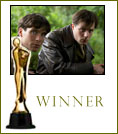
The Irish Film & TV Awards were held on February 9, with awards going to what was clearly a very good year for Irish film generally. The two heavyweights this year were Ken Loach's "The Wind That Shakes the Barley" (photo), which picked up the Best Film award, and "Breakfast on Pluto" that picked up the Best Script award for Neil Jordan and Pat McCabe. Cilliam Murphy also picked up a Best Actor award for his role in "Breakfast".
Also worth checking is "Small Engine Repair", written by Niall Heery. For the full list of winners, check the Irish Film & TV Awards.
Monday, February 05, 2007
UK: How to write a TV treatment
It's a well-known fact that TV offers more work for writers than anywhere else. And just like in movies, the producers are sighing, "Where are all the good writers?" To hopefully help you provide the answer, London's The Script Factory is running a special event aimed at getting you on the first rung of the ladder on March 29 & 30, 2007. "How to Write a TV Treatment" will be led by Yvonne Grace (who has worked in various writing and production roles for "Coronation Street", "Eastenders" and "Crossroads"), and there are only 12 places available. For details, visit The Script Factory.
Thursday, January 11, 2007
Piaf biopic to premiere at the Berlinale

One of the season's big events will doubtless be the new bio-pic of the classic chanteuse Edith Piaf, called "La môme" or, for English speakers, "La vie en rose", which will premiere at the upcoming Berlinale festival. I saw a long trailer of this at Cannes, and the least you can say is that it looks lush. Olivier Dahan is credited as both writer and director. If bells are ringing, this is probably because he is the director of the spectacular "Crimson Rivers II". So we can reasonably expect a pretty big movie experience, not least because the cast includes Gerard Depardieu, Sylvie Testud and Jean-Paul Rouve. The singer herself is played by the suitably waif-like Marion Cotillard (with Jil Aigrot some of the actual singing).
"La vie en rose" will open in France and Germany in February, with other European countries later (and the UK in the autumn). To see the short trailer and more details en français, visit TFM distribution.
Edith Piaf on iTunes UK:

Edith Piaf on iTunes US:
Monday, January 08, 2007
Q&A with Kevin MacDonald and Giles Foden
"The Last King of Scotland", the first fiction feature from Oscar-winning documentary director Kevin Macdonald, is rooted in the reality of Idi Amin's brutal rule in Uganda. Wooed by the president's generosity, charm and apparent populist appeal, young Scottish doctor Nicholas Garrigan (James McAvoy) agrees to become Amin's personal physician and soon finds himself appointed number-one advisor on all manner of subjects, from architecture to foreign policy. By the time he is forced to face the atrocities of Amin's command, the doctor is already in over his head. A bold combination of comedy and horror that balances psychological insight and historical facts, the film's success is founded on a monumental performance from Forest Whitaker. The film is based on a book by Giles Foden.
Curzon Soho in London are hosting a screening followed by a Q&A session with MacDonald and Foden on Friday January 12 at 6.30 pm. For details, visit Curzon Cinemas.
Curzon Soho in London are hosting a screening followed by a Q&A session with MacDonald and Foden on Friday January 12 at 6.30 pm. For details, visit Curzon Cinemas.
Friday, December 22, 2006
Screenplay Europe: Search by theme
Just a note about a new function on Screenplay Europe. I have been spending time re-organising the posts over the past two years to make it easier to find items. If you're only interested in German cinema, or would like an overview of festivals news, you can find them by clicking on the relevant tabs on an article. I still have to classify about half of the news items. You can find the most popular ones below. Happy hunting.
Wednesday, December 06, 2006
German film picks up European Film Award

I have been out of the loop for a few days, and so missed discussing the European Film Awards 2006 held in Poland recently. To save time, I suggest that you simply visit the Cineuropa page about the event.
Here's the executive summary:
European Film 2006
The Lives of Others (Das Leben der Anderen) by Florian Henckel von Donnersmarck, Germany
European Director 2006
Pedro Almodóvar for Volver, Spain
European Actress 2006
Penélope Cruz for Volver by Pedro Almodóvar, Spain
European Actor 2006
Ulrich Mühe for The Lives of Others (Das Leben der Anderen) by Florian Henckel von Donnersmarck, Germany
European Discovery 2006
13 Tzameti by Gela Babluani, France, Georgia
European Screenwriter 2006
Florian Henckel von Donnersmarck for The Lives of Others (Das Leben der Anderen), Germany
European Cinematographer 2006
José Luis Alcaine for Volver by Pedro Pedro Almodóvar, Spain
Barry Ackroyd for The Wind That Shakes the Barley by Ken Loach, UK, Ireland, Germany, Italy, Spain
European Composer 2006
Alberto Iglesias for Volver by Pedro Almodóvar, Spain
EFA Lifetime Achievement Award 2006
Roman Polański, Poland
European Achievement in World Cinema 2006
Jeremy Thomas, UK
EFA Award for An Artistic Contribution 2006
Pierre Pell and Stéphane Rozenbaum for The Science of Sleep (La science des rêves ) by Michel Gondry, France
People’s Choice Award Best European Film 2006
Volver by Pedro Almodóvar, Spain
Fipresci Award 2006
Regulars Lovers (Les Amants réguliers) by Philippe Garrel, France
ARTE award, EFA Documentary 2006
Into Great Silence (Die Grosse Stille) by Philip Groning, Germany
UIP Award, Short Film 2006
Before Dawn by Bálint Kenyeres, Hungary
UPDATE DEC 14: "The Lives of Others" has just picked up a nomination from the (Hollywood Foreign Press Association) for the "Best Foreign Language Film Golden Globe Award".The last German nomination was for "Goodybe Lenin".
Wednesday, November 08, 2006
Paul Weiland, Bill Nicholson podcasts
 You weren't there, so how would you like to hear what was said at the UK's debut Screenwriters' Festival? Some of the proceedings of the June event have been compiled and are available on the website as payable downloads. Speakers include Paul Weiland, talking about his semi-autobiographical "Sixty Six" with co-writers Bridget O'Connor and Peter Straughan, Terry Loane and Fiona Kinsella on the process of writing "Mickybo and Me", Dan Reed on "Straightheads", Tony Grison and Peter Carlton on "Brothers of the Head" and William Nicholson (photo) about surviving Hollywood.
See the list for the full selection on the Screenwriters Festival website, as well as tips on pitching.
Friday, November 03, 2006
Indie festival and masterclasses in Brussels
As I was on the int'l jury last year, I have a soft spot for Brussels "International Festival of Independent Film" (FIFI in French), which is now in its 33rd year. It has always championed the more adventurous end of film, particular Asia. This year's focus is on Taiwan, with films such as "Love's Lone Flower", "Blue Cha Cha" and "Taiwan Black Movies". There will also be films from the Philippines and Iran. Perhaps unique in its genre, the festival also has a special section for the deaf each year.
A special roundtable concerning 3D animation co-production will be held. Director Tsao Jui-yuan will be among the guests. Steve Montal will also chair a discussion about "Indie production in Times of Global Instability", while Jeff Bens will give a talk on "Creating Attaching Characters".
FIFI will be held between Nov 7 and 12, 2006. Entrance for most films is a mere €3. For details, visit the FIFI website.
A special roundtable concerning 3D animation co-production will be held. Director Tsao Jui-yuan will be among the guests. Steve Montal will also chair a discussion about "Indie production in Times of Global Instability", while Jeff Bens will give a talk on "Creating Attaching Characters".
FIFI will be held between Nov 7 and 12, 2006. Entrance for most films is a mere €3. For details, visit the FIFI website.
Thursday, October 12, 2006
Writers' site covers Italian screenwriting
I must admit that I don't follow the writing scene in Italy that much any more, mea culpa. Yet Italy still has a strong tradition of screenwriting, where the writer is recognised as playing an entirely dfferent role to the director (unlike France and Belgium). So directors often actively seek out writers with which to work.
To keep in touch, I recommend spending some time on the Italian screenwriters' site Sceneggiatori.com. It acts as a good source of information concerning writers' groups, workshops, articles, competitions and relevant screenwriting news in Italian. It also features a catalogue of available scripts and a busy messageboard (with a section in English just dying for some input).
To keep in touch, I recommend spending some time on the Italian screenwriters' site Sceneggiatori.com. It acts as a good source of information concerning writers' groups, workshops, articles, competitions and relevant screenwriting news in Italian. It also features a catalogue of available scripts and a busy messageboard (with a section in English just dying for some input).
Monday, October 09, 2006
"Cages" and "Falafel" dominate Namur Francophone fest
 The 21st International Festival of Francophone Film closed over the weekend, bringing some 35,000 viewers to the town of Namur in Belgium. The festival acts as both a showcase for new films and an industry event, where producers and writers meet. As Algerian producer and jury member Liazid Khodja pointed out, there were films and jury members from 4 continents.
The festival has its awards, called the "Bayards". Highlights of this year's selection were the Bayard d'or for Best Film going to Michel Kammoun's "Falafel", a low-budget exploration of Beirut by night which also won the award for best original music by Toufic Farroukh. The other big winner was Olivier Masset-Depasse's debut feature "Cages", a Belgo-French production about a couple that organises a competition of animal noises in a cafe. The film picked up the Audience Award and the Youth Jury award (with a special mention for the screenplay). "This is particularly satisfying," said writer-director Masset-Depasse (photo, left). "My previous short films were wanky auteur films. This time I decided to write for the real jury: the audience." The Bayard for the best script went to Jean-Stéphane Bron and Karine Sudan for the Franco-Swiss production, "Mon frère se marie".
For the full results, visit FIFF.be.
Tuesday, September 26, 2006
Chirac changes heart after viewing "Indigenes/Days of Glory"
 In one of the most remarkable developments in movie history, France's President Chirac has moved to redress claims for war pensions following a movie. "Indigènes/Days of Glory" tells the tale of France's Colonial soldiers in the Second World War. It is estimated that one in three fighters were from countries such as Algeria, Tunisia, Senegal and elsewhere. Yet despite regular claims and court orders, the survivors have not been receiving full war pensions since many of the states achieved independance in the sixties.
After viewing the film with the cast, Chirac decided to do something. The French government is expected to announce this week that full pensions will be granted to the survivors.
"Indigènes/Natives/Days of Glory" was written by Rachid Bouchareb and Olivier Lorelle ("The Devils", "Avec un grand A"). Its five main stars picked up the Best Male Actor award collectively at this year's Cannes film festival. It is released in France on September 26 and is showing at the Festival Int'l de Film Francophone de Namur.
UPDATE Oct 9: Palme d'Or-winning actor Jamel Debbouze will not be attending the Algerian premiere of "Indigènes". The Algerian authorities refused to grant him a visa, although it is not clear why. In France, meanwhile, the film opened very successfully, ranking as the 10th strongest opening of 2006.
For a series of articles about "Indigènes, visit CinEuropa. Or visit the Indigenes/Days of Glory site (French and English).
Monday, September 18, 2006
People's Choice Award
 While the members are busy selecting the nominees for this year's august European Film Academy awards to be held in Warsaw in December, the rest of us can vote in the aptly-named People's Choice Awards 2006. The nominess included "L'enfant/The Child", "Adam's Apples", "Crime Novel/Romanzo Criminale" (photo), "The Elementary Particles", "March of the Penguins" and "Paradise Now". This is a simple Fave Film award, with no special prizes for scripts. It's certainly an interesting selection of movies, although I doubt that many people apart from journalists can have seen them all due to the patchy distribution of some of the films within Europe.
For more details and to cast your vote, visit the People's Choice Award 2006.
March of the Penguins on Amazon UK
March of the Penguins on Amazon US
Wednesday, September 13, 2006
"Warchild" wins Best Screenplay Award in Montreal
 "Warchild", the second of a German-language Balkan trilogy by Christian Wagner (left), picked up the best Screenplay Award at the 30th Montreal World Film Festival. Written by Edin Hadzimahovic and Stefan Daehnert, "Warchild" is the tale of a Bosnian mother who discovers her long-lost daughter is still alive and well - with a family in Germany. The film, based on a true story, had already picked up the Special Jury Prize at the Bavarian Film Award. While the festival was still underway, "Warchild" was invited to screen at the Hamptons Film Festival which is held from 18th to 22nd October. For more news about Warchild, visit the official Warchild site. UPDATE: "Warchild" has just picked up the Audience Award at the 9th Festival Slovenskega Filma, held in the Slovenian town of Portorož from September 14 - 17.
In other German festival news, co-production "Khadak" by Peter Brosens and Jessica Woodworth was awarded the Lion of the Future Premio Venezia Opera Prima "Luigi de LAURENTIIS" at the 2006 Venice Film Festival for the Best Feature Film Debut. This award is open to all of the film debuts participating in the program sections of the Venice Film Festival and has a purse of Euros 100,000.
The Best of Short Films Festival in La Ciotat distinguishes the best shorts shown at international festivals for the year. Maximilian Engert was pleased with the award for his short "With a Flower (Durch die Blume)" as the third best short.
Monday, September 11, 2006
Resnais picks up Silver Lion at Venice
Veteran French director Alain Resnais has a second Venice award to his credit with "Coeurs/Private Fears in Public Places". Based on the play by Alan Ayckbourn and written by Jean-Michel Ribes, "Coeurs" follows his Golden Lion in 1961 for "Last Year at Marienbad". Jean-Michel Ribes is an actor, director and writer best known for "Palace", "La galette du roi" and "Rien ne va plus".
Interviewed by Cineuropa, Resnais remembers: "During the first 45 minutes of Last Year at Marienbad, the audience reacted very violently, responding to the dialogue in the film with deafening laughter. I turned to the organisers: 'let’s stop the film, this is painful!' Then, after a series of images, most of the audience members began applauding, a respectful silence grew and, ultimately, the Golden Lion. My directing career could have ended definitively that night because I would never have been able to come back to Venice with another film." See the full interview here.
Interviewed by Cineuropa, Resnais remembers: "During the first 45 minutes of Last Year at Marienbad, the audience reacted very violently, responding to the dialogue in the film with deafening laughter. I turned to the organisers: 'let’s stop the film, this is painful!' Then, after a series of images, most of the audience members began applauding, a respectful silence grew and, ultimately, the Golden Lion. My directing career could have ended definitively that night because I would never have been able to come back to Venice with another film." See the full interview here.
Wednesday, September 06, 2006
"Volver" and "Paris" to feature in Beirut festival
 You have to salute the courage of the organisers of the Beirut International Film Festival. They have decided to press ahead with the seventh edition of the event, just months after the end of the war. Quoted by Screen Inernational, Colette Naufal, director of the festival since 1997 said, “Let’s shoot films not missiles in the Middle East. I would like you all to come to Beirut to show your solidarity with us.” She told international journalists at the Venice festival that their presence would signal that “normal life could be around the corner.” The festival offers a much-needed showcase for cinema of the Middle East, with a script competition and plans to create a foundation for supporting young film-makers. "Volver" and "Paris, je t'aime" are two of the international films being showcased, with a strong section featuring new Middle Eastern cinema. This year's festival will be held between October 4 and 11, 2006.
For more details about the event, visit Beirut Film Foundation.
Sunday, September 03, 2006
Sending scripts to agents and production companies
The UK Scriptwriters message board recently discussed the sending of unsolicited scripts to agents, the BBC or production companies. Andrew Rainnie weighed in with this advice for new writers, based on his experience as a reader for a literary agency in the UK.
“I was an intern at a small literary agency for seven months, and now work as a freelance reader and editor, and in all that time I have read about four unsolicited scripts worth making - not a lot given I was reading or glancing over 10 or 12 every week.
“Writing is rewriting”
As other people have pointed out, there are a lot of 'daft' writers out there, although I would be more kind and use the word deluded. They simply do not understand the sheer volume of scripts out there, and if they are like one writer I spoke to who gets 'tired of reading' his own scripts, then that is tantamount to laziness. Writing for film and TV is all about rewriting, so if you think you can simply write a script, put it through spell-check then send it off, you are deluding yourself and wasting a reader's time.Another major problem with unsolicited writers is that they refuse to show their work to anyone else for fear of someone stealing it. Again, while an intern, we received many a call from writers who didn't want their scripts read by 'just anyone' and that it was for the agents' eyes only, which was ridiculous. If you want a different perspective, you need to allow others to read your scripts. I know it is easy to become lost in the work itself, but if a writer is unwilling to consider changes then it is the sign of a true amateur. Many amateur writers will not listen to input, deluded by the thought that they are better than whoever is giving out advice.
Get some advice
And for all those out there who expect a full report from the BBC - stop complaining. The readers at the BBC work incredibly hard, and they are the only broadcasting company who invite unsolicited material all year round. If you only get a standard letter, it means your script isn't good enough. Sorry, but it’s a fact, most people send the BBC shite expecting to be given a contract. And if these people keep complaining about the fact that the BBC don't give them respect (or even worse, that the BBC is stealing their ideas), then eventually the BBC will turn around and say 'Fine, we're not accepting unsolicited material anymore.' So stop spoiling what is a great scheme [the BBC Writers’ Room – ed] by simply getting some advice about your script before sending it in, letting others read it beforehand and being open to suggestions and new ideas. Maybe once you focus your attention and energy on your script rather than complaining about the BBC you will find it improves.”
Rainnie has an MA in English Literature and Film & TV Studies, MA/PGDip in Screenwriting, seven-month internship at Blake Friedmann Literary Agency (also worked on Julian Friedmann's DTP title ScriptWriter) and has worked for the Writers Guild of Great Britain. To reach him, send an e-mail to fresh_rain@ntlworld.com.
“I was an intern at a small literary agency for seven months, and now work as a freelance reader and editor, and in all that time I have read about four unsolicited scripts worth making - not a lot given I was reading or glancing over 10 or 12 every week.
“Writing is rewriting”
As other people have pointed out, there are a lot of 'daft' writers out there, although I would be more kind and use the word deluded. They simply do not understand the sheer volume of scripts out there, and if they are like one writer I spoke to who gets 'tired of reading' his own scripts, then that is tantamount to laziness. Writing for film and TV is all about rewriting, so if you think you can simply write a script, put it through spell-check then send it off, you are deluding yourself and wasting a reader's time.Another major problem with unsolicited writers is that they refuse to show their work to anyone else for fear of someone stealing it. Again, while an intern, we received many a call from writers who didn't want their scripts read by 'just anyone' and that it was for the agents' eyes only, which was ridiculous. If you want a different perspective, you need to allow others to read your scripts. I know it is easy to become lost in the work itself, but if a writer is unwilling to consider changes then it is the sign of a true amateur. Many amateur writers will not listen to input, deluded by the thought that they are better than whoever is giving out advice.
Get some advice
And for all those out there who expect a full report from the BBC - stop complaining. The readers at the BBC work incredibly hard, and they are the only broadcasting company who invite unsolicited material all year round. If you only get a standard letter, it means your script isn't good enough. Sorry, but it’s a fact, most people send the BBC shite expecting to be given a contract. And if these people keep complaining about the fact that the BBC don't give them respect (or even worse, that the BBC is stealing their ideas), then eventually the BBC will turn around and say 'Fine, we're not accepting unsolicited material anymore.' So stop spoiling what is a great scheme [the BBC Writers’ Room – ed] by simply getting some advice about your script before sending it in, letting others read it beforehand and being open to suggestions and new ideas. Maybe once you focus your attention and energy on your script rather than complaining about the BBC you will find it improves.”
Rainnie has an MA in English Literature and Film & TV Studies, MA/PGDip in Screenwriting, seven-month internship at Blake Friedmann Literary Agency (also worked on Julian Friedmann's DTP title ScriptWriter) and has worked for the Writers Guild of Great Britain. To reach him, send an e-mail to fresh_rain@ntlworld.com.
Monday, August 28, 2006
Germany's Scriptforum announces conference programme
The Scriptforum Conference in Berlin in October is one of the Europe's foremost scriptwriting events. In addition to the conference itself, a series of workshops are being organised in English and/or German. These include "Eroticism in Screenplays", "Creativity Access: Diving into Story" and "Action – Writing for a Successful Genre”.
For details, see the Scriptforum website.
For details, see the Scriptforum website.
Sunday, August 20, 2006
British sitcoms celebrated in documentary
Britain has been producing sitcoms since the fifties, so it was about time the subject was given a serious documentary. "Laughter in the House" is a superb look at the history and peak moments of British sitcoms, from the earliest days up to the recent classics such as "Only Fools and Horses" (written by John Sullivan), "The Young Ones", Fawlty Towers", "Blackadder" and "Rising Damp". Of particular interest to writers are the numerous interviews of the scriptwriters, many of whom wore woolie jumpers. Argh, what does that tell us about the writing profession?
The series is currently running on BBC2. If this link doesn't help, try the BBC2 homepage.
"Only Fools and Horses" has just been voted by viewers as Britain's best Sitcom, edging out "Blackadder", "Vicar of Dibly", "Dad's Army" and "Fawlty Towes". But where does "Absolutely Fabulous" come in? For the full list, click here.
The series is currently running on BBC2. If this link doesn't help, try the BBC2 homepage.
"Only Fools and Horses" has just been voted by viewers as Britain's best Sitcom, edging out "Blackadder", "Vicar of Dibly", "Dad's Army" and "Fawlty Towes". But where does "Absolutely Fabulous" come in? For the full list, click here.
Friday, August 11, 2006
"Adam and Paul" writer-director team plan new movie
I've never understood why "Adam and Paul" didn't chalk up more viewers worldwide. Despite being a runaway hit at home in Ireland, releases elsewhere were very tepid. This was probably due to the premise, which has been summed up (accurately) as "Laurel and Hardy waiting for Godot in Dublin on smack". However, the bittersweet tale is probably one of the best-written and engaging comedies I've seen in years.
The writing-directing team of Mark O'Halloran and Lenny Abrahamson are now set to start shooting "Garage" in Ireland. I'll leave the comments to one of the producers, the UK's FilmFour. "Lenny and Mark [have] taken a genre we think we know and think may have had its day – the small-town drama – and used it to make something new, poignant and hilarious".
The writing-directing team of Mark O'Halloran and Lenny Abrahamson are now set to start shooting "Garage" in Ireland. I'll leave the comments to one of the producers, the UK's FilmFour. "Lenny and Mark [have] taken a genre we think we know and think may have had its day – the small-town drama – and used it to make something new, poignant and hilarious".
Saturday, August 05, 2006
Verhoeven's "Black Book" trailer online
 Paul Verhoeven, the maker of "Basic Instinct", "Total Recall" and "Starship Troopers" is making a return to the screen with a Dutch-speaking film. "Zwartboek/Black Book" will be released in Holland in September, according to the site of the Dutch distributor A Film which is already airing the trailer (click on the photo left). The story of a Dutch Jew trying to survive in Holland during the war was co-written with Gerard Soeteman, the prolific writer of "Turks Fruit/Turkish Delight" and "Soldier of Orange". Carice van Houten and Thom Hoffman are the stars in what looks like being a lush period piece. Verhoeven and Hoffman have been working on the story on and off for 20 years.
"Black Book" is a Dutch/UK/German co-production. It will be unveiled at the upcoming Venice Film Festival. "I could not think of a more beautiful premiere for my film," says Verhoeven. Releases have been arranged in some 50 countries, which is quite exceptional for a Dutch-speaking film.
Paul Verhoeven on Amazon FR
Monday, July 24, 2006
UK co-prods have bumper year
One third of takings at UK cinemas last year; that's the remarkable figure raked by the high-profile co-productions with major studios. With hits such as "Harry Potter and the Goblet of Fire", "Charlie and the Chocolate Factory", "Batman Begins", UK film is riding on a popular wave. John Woodward, Chief Executive Officer of the UK Film Council said: “This... proves just how important film is to both our economy and culture. The figures show that the public love British films, and 2005 was a great year for British films at the cinema with the largest slice of box office takings since records began."
Calling "Batman Begins" a British film is a bit cheeky. Once again, we would have to open that thorny issue of a film's nationality. Personally, I find the success of "Wallace and Gromit" and "Valiant" far more encouraging. Recent UK films to look out for include "Mrs Henderson Presents", "The Wind That Shakes the Barley" and teen spy thriller "Stormbreaker".
Calling "Batman Begins" a British film is a bit cheeky. Once again, we would have to open that thorny issue of a film's nationality. Personally, I find the success of "Wallace and Gromit" and "Valiant" far more encouraging. Recent UK films to look out for include "Mrs Henderson Presents", "The Wind That Shakes the Barley" and teen spy thriller "Stormbreaker".
Thursday, July 20, 2006
RIP: Gerard Oury, king of comedy
One of cinema's greatest comedy writers and directors, Gérard Oury, died peacefully on Thursday morning at his home in St. Tropez. Oury was the director and writer of some of Europe's zaniest and most popular comedies, such as "La grande vadrouille", "Le Corniaud/The Sucker" and "Le cerveau". Aged 87, his last film was "Le schpuntz" in 1999.
Oury is survived notably by his daughter Daniele Thompson, the well-respected comedy director.
Oury is survived notably by his daughter Daniele Thompson, the well-respected comedy director.
Wednesday, July 19, 2006
"Tanguy" a rip-off? Yes and no
The French movie world is still debating the strange verdict given in the case of the film "Tanguy" on July 5. Three scriptwriters claim that the film is based on their script "Cherche parents désepèrement", as the premise and a number of key details are identical. The French court decided that "Tanguy" was not a copy of their script despite the similarities, but that the producer Téléma broke confidentiality by getting the director Etienne Chatiliez to read and (apparently) use elements of it.
This verdict bothers me. Either "Tanguy" is based on an original idea by the three writers, or it isn't. The judgment should stop there. It would seem impractical for a production company NOT to let a director read the script. How else could they determine if someone wants to shoot the thing?
There will most likely be an appeal.
This verdict bothers me. Either "Tanguy" is based on an original idea by the three writers, or it isn't. The judgment should stop there. It would seem impractical for a production company NOT to let a director read the script. How else could they determine if someone wants to shoot the thing?
There will most likely be an appeal.
Monday, July 17, 2006
Brussels fest salutes Hungary
The recent Brussels Film Festival split its foremost prize between two Hungarian films. The Iris award went to "Fresh Air/Friss Ievego" by Agnes Kocsis and "Taxidermia" by Gyorgy Palfi. Best performance went to Marjana Karanovic for her role in "Grbavica" (which also picked up the Canvas TV award). The RTBF TV award went to "Ping-Pong" by Germany's Matthias Luthardt. The Be TV Award went to Jens Lien's "Bothersome Man". "Ca rend heureux", a Belgian collective film directed by Joachim Lafosse picked up the Audience Award. There were no screenplay awards as such, but a competition for Best Concept (in essence, a pitch and summary) was won by Corinne Klomp and Pierre Leyssieux for "Gueule d'emploi" and "Westonia" by Olivier Nilsson-Julien & Andri Luup.
Friday, June 16, 2006
Flagey film fest showcases new talent
 This year's Flagey Film Festival in Brussels will feature some of the hottest releases from across Europe, including award-winners from the Berlinale and Cannes. If you've been watching the festival news over the past few months, you'll have heard all about "12.08 East of Bucharest", "The Bothersome Man", "Grbavica", "Stetsi/Something Like Happiness" and "Komma". Over ten days, the festival will feature 30 films in all, including premieres of a number of high-profile Belgian films.
Other highlights include a major pitching competition, open-air screenings and an award for Belgian TV scriptwriting.
June 30-July 8, Brussels. Visit the Flagey Film Festival site for more details.
Monday, June 12, 2006
Guillermo Del Toro to appear at UK Screenwriter festival
Cult writer/director Guillermo Del Toro is one of Mexico's most popular writer / directors, with world wide success for such films as 'Cronos', 'Mimic', 'Blade II', 'The Devil's Backbone' and 'Hellboy'. He appearing at the upcoming Screenwriters' festival in Cheltenham, UK, where he will discuss and show some of his work, having recently completed his horror fantasy, 'Pans Labyrinth'. This is a rare opportunity to hear from a master storyteller. He will be at the Festival on Wednesday 28th June to discuss his work in detail with film writer Nigel Floyd. Other noted writers at the event will include Julian Fellowes, Julian Friedman, Jimmy McGovern, Nicholas Roeg and Tony Marchant. For details, visit the Screenwriters Festival.
Wednesday, June 07, 2006
Top 10 European films by attendance
Released at the same time as the Cannes festival, the figures from the European Observatory concerning film attendance in Europe always make for good reading. Inevitably, they never reflect the opinions of either reviewers nor festival awards. It would be very surprising if they did, in fact, as one of the roles of festivals is to highlight films that the audience would not otherwise find.
N° of films produced in 2005:
Europe 798
US 699
Average cost of a feature:
France $6.2 million
UK $13.3 million
US: $60 million for majors, $23.5 for indies
Spectators in 2005
Europe 892 million
US: 1403 million
The Top 10 European films by attendance in 2005:
Alexander
Pride & Prejudice
Brice de Nice (a surprising result as it was only released in French-speaking Europe)
The March of the Emperor
Der Untergang/Downfall
Oliver Twist
Torrente 3 (only seen in Spain as far as I know)
Nanny McPhee
Les Poupées Russes/Russian Dolls
Bridget Jones: The Edge of Reason
Film attendance gives only a limited view of a film's career, as DVD and TV sales are so important. This is even more true in Europe, where a significant number of films only get a very limited release outside their country of origin.
N° of films produced in 2005:
Europe 798
US 699
Average cost of a feature:
France $6.2 million
UK $13.3 million
US: $60 million for majors, $23.5 for indies
Spectators in 2005
Europe 892 million
US: 1403 million
The Top 10 European films by attendance in 2005:
Alexander
Pride & Prejudice
Brice de Nice (a surprising result as it was only released in French-speaking Europe)
The March of the Emperor
Der Untergang/Downfall
Oliver Twist
Torrente 3 (only seen in Spain as far as I know)
Nanny McPhee
Les Poupées Russes/Russian Dolls
Bridget Jones: The Edge of Reason
Film attendance gives only a limited view of a film's career, as DVD and TV sales are so important. This is even more true in Europe, where a significant number of films only get a very limited release outside their country of origin.
Monday, May 29, 2006
Cannes 2006 winners (and their writers)
Although many people are saying that overall this was a rather tepid edition, the top winners are quite strong. Giving the best actor and actress awards to collective casts is also an interesting notion. But I'd be interested to find out how many of the jury have actually read the script of "Volver".
The Awards
Palme d´Or
"The Wind That Shakes The Barley" by Ken Loach. Script by Paul Laverty ("Ae Fond Kiss", "Sweet Sixteen", "My Name is Joe").
Grand Prize
"Flanders" by Bruno Dumont on his own script.
Best Actress
The cast of "Volver"
Best Actor
The cast of "Indigènes" (aka "Days of Glory", script by Rachid Bouchareb, Olivier Lorelle)
Best Director
Alejandro Gonzalez Iñarritu - "Babel" (script by Guillermo Arriaga).
Best Screenplay
"Volver" - Pedro Almodóvar
Jury Prize
"Red Road" by Andrea Arnold on her own script.
Caméra d´Or
"12:08 East Bucharest" by Corneliu Porumboiu on his own script. This is Poromboiu's first feature-length movie, initially developed during a Résidence du Festival in 2004 on the back of his award-winning short film "Trip to the City". "12:08" will premiere at the Transylvania International Film Festival (TIFF) in Cluj on June 2.
Palme d´Or for the Best Short Film
"Sniffe" by Bobbie Peers
For the full round up, see Cineuropa.
The Awards
Palme d´Or
"The Wind That Shakes The Barley" by Ken Loach. Script by Paul Laverty ("Ae Fond Kiss", "Sweet Sixteen", "My Name is Joe").
Grand Prize
"Flanders" by Bruno Dumont on his own script.
Best Actress
The cast of "Volver"
Best Actor
The cast of "Indigènes" (aka "Days of Glory", script by Rachid Bouchareb, Olivier Lorelle)
Best Director
Alejandro Gonzalez Iñarritu - "Babel" (script by Guillermo Arriaga).
Best Screenplay
"Volver" - Pedro Almodóvar
Jury Prize
"Red Road" by Andrea Arnold on her own script.
Caméra d´Or
"12:08 East Bucharest" by Corneliu Porumboiu on his own script. This is Poromboiu's first feature-length movie, initially developed during a Résidence du Festival in 2004 on the back of his award-winning short film "Trip to the City". "12:08" will premiere at the Transylvania International Film Festival (TIFF) in Cluj on June 2.
Palme d´Or for the Best Short Film
"Sniffe" by Bobbie Peers
For the full round up, see Cineuropa.
Friday, May 26, 2006
Cannes: ScriptEast to support "east wind rising"
I won't bother giving you a low-down of what was happening at Cannes, as every newspaper in the world (and a good handful of blogs) cover the event. One thing that did stand out for me is the continuing rise of film-makers from the former East European countries. This is not exactly new, as "Kontroll", "Up and Down" and "The Death of Mr Lazarescu" made big impacts in previous years (not forgetting the work and Palmes that have gone to Roman Polanski and Emir Kusturica). But their production is now comparable in numbers to that of Belgium and Ireland. For a good round-up of what's what on the scene this year, check this article on DW-World.
But what about the scriptwriting scene? A new development project was launched at Cannes. ScriptEast is a project-based training programme designed specifically for scriptwriters from Eastern and Central Europe. The aim is to select the best local scripts and their authors and "help them become renowned worldwide" (according to their literature). Concretely, it will involve a one-week workshop in Poland with online follow-up, an evaluation session during IFF in Berlin, followed by more homework and a final session at next year's Cannes.
Costs are covered by Poland's Independent Film Foundation, supported by the Media programme, TVP, the Plish Film Institute and Apple Film Production. Participants pay a mere €200. For details, contact Katarzyna Dlugosz on katarzyna.dlugosz@pnf.pl. I have a website address, but it doesn't seem to be working. I'll place it in case it comes online some time soon: Script East.
But what about the scriptwriting scene? A new development project was launched at Cannes. ScriptEast is a project-based training programme designed specifically for scriptwriters from Eastern and Central Europe. The aim is to select the best local scripts and their authors and "help them become renowned worldwide" (according to their literature). Concretely, it will involve a one-week workshop in Poland with online follow-up, an evaluation session during IFF in Berlin, followed by more homework and a final session at next year's Cannes.
Costs are covered by Poland's Independent Film Foundation, supported by the Media programme, TVP, the Plish Film Institute and Apple Film Production. Participants pay a mere €200. For details, contact Katarzyna Dlugosz on katarzyna.dlugosz@pnf.pl. I have a website address, but it doesn't seem to be working. I'll place it in case it comes online some time soon: Script East.
Monday, May 15, 2006
Scriptwriters make noise at Cannes
 Following the lead of 101 Scénaristes last year, Cannes will feature a number of scriptwriting initiatives. The largest will probably be the Journées du Scénario/Writers' Days being run by France's enterprising UGS. They have set up a database of available scripts and will run a Script Market, sailing events and lots of talks and round tables. Unfortunately, the market is only open to produced writers, but will doubtless be an exciting event. Catherine Deneuve has accepted to be the “godmother”, or patron, of the whole thing.
Staying in France, the Adami is running a second Speed Dating session on Monday 22. The idea is simple: put a bunch of writers, actors, producers and musicians in the same space for about an hour and hope that connections are made. Adami is particularly good at finding and supporting young actors.
Writer/director Karan Johar (“Khabhi Khushi Khabhie Gham”) will be talking at the UK Film Centre on Friday May 19, followed by Ken Loach the next day. The London Script Consultancy will hold its second Panasonic International Filmmakers' Pitch. But admissions closed May 15.
Last but not least, Cannes will also see the unveiling of the first issue of “Le Scénario Français” a new quarterly in French (mostly) that features articles and pitches - including contributions from yours truly.
Relevant links:
UGS-Online
Adami
UK Film Centre
Le Scénario Français
If you hear of any other events, please leave a message.
Thursday, May 11, 2006
Production up, audiences down in Europe
It has been a great year for European production, with overall figures up by 37 to 798 films produced in the 25 countries of the EU last year according to figures published by the European Audiovisual Observatory. But although there were differences locally, the overall cinema attendance fell by about 11%. France is still the biggest producer, with 240 films (which parly explains its strong presence at the upcoming Cannes festival). European cinema represents about 24% of ticket sales, although one of the big trends recently is for local films to break records in their home turf without being able to score across the Union as a whole.
Wednesday, May 03, 2006
Quote of the week: writers in the mist
 It's one of those comments that a lot of people don't want to hear: the movie business is a business. And to be able to deal with it sucessfully, you have to embrace its potential and constraints. The UK will soon host its first screenwriters' festival June 27-30 in Cheltenham. At its launch, the British writer Bill Nicholson (writer of the upcoming "Elizabeth: The Golden Age" and co-writer of "Gladiator") gave a speech which should be compulsory reading for anyone wanting to start screenwriting (or indeed lyric writing).
Here's how he sets the scene: "Why is it that everybody I know, everybody who comes onto my website, everybody I meet in a taxi, wants to be a screenwriter? There seem to be thousands and thousands of people who either are or are becoming screenwriters. And yet every time I meet a producer he says to me, 'I have a project, but I can’t find a writer. Where are the writers? There are no writers.' This gives rise to a strange and haunting image. Armies of wannabe screenwriters are marching away with their heads held high and smiling into a mist, and none of them are coming back. It’s like a scene from the first world war. It’s tragic. Somewhere there’s a swamp in which flounders the dying youth of British screenwriting talent."
Sound familiar? Click through to the site and take five minutes to read the speech in full.
More at Screenwriters Festival 06. Other writers scheduled to appear at the event include Julian Fellowes ("Vanity Fair" and "Julian Fellowes Investigates" and Jimmy McGovern ("Brookside" and "The Street").
Sunday, April 30, 2006
"Lemming" leads European releases in UK
 "Lemming", the dark thriller from Dominik Mill, co-written with Gilles "Who Killed Bambi?" Marchand, has just been released in the UK through Artificial Eye. Charlotte Rampling and Charlotte Gainsbourg star in a story of two couples that sit down for a dinner party with unsettling results. Other films being released over the May weekend include "Lost Embrace" by Daniel Burman, "Don't Come Knocking" by Wim Wenders and "The Moguls" by Michael Traeger.
To see where "Lemming" is playing, visit Artificial Eye.
Friday, April 21, 2006
11 European films selected for Cannes line-up
No less than 11 European films are included in the official line-up for the Cannes Festival this year. They include films by Pedro Almodovar (Spain), Nanni Moretti and Paolo Sorrentino (Italy), Ken Loach and Andrea Arnold (UK), Aki Kaurismaki (Finland), Lucas Belvaux (Belgium), Pedro Costa (Portugal) and three films from France (Nicole Garcia, Bruno Dumont and Xavier Giannoli). In addition to this selection, interesting in itself, Tony Gatlif's "Transylvania" will playing out of Competition.
For the full line-up, see Cannes or Bust.
For the full line-up, see Cannes or Bust.
Friday, April 14, 2006
Oscar Moore competition: "none merit the prize"
 The Oscar Moore Foundation organises one of Europe's most respected screenwriting competitions. One of its particularities is to set a theme each year, 2006 being comedy. In a surprise announcement, however, chairwoman Anne Marie Flynn said in a statement: "This year, though a number of scripts were deemed notable either for the quality of writing or originality of premise, it was our final opinion that none reached the requisite quality to merit the prize."
This must be a crunching disappointment to the people that sent them in. It's also an embarassment for the Foundation itself (the awards night, set for April 20, will now be a quiz night). But it must be said that the Foundation is making a hard but ultimately commendable decision to maintain some sort of quality control. It is widely recognised that many scripts in Europe are being rushed into production without having had adequate development. If a Foundation devoted to high levels of writing allows its standards to slip, who will respect them?
One issue the Foundation might want to take on board, however, is the visibility of the Oscar Moore competition. Despite its association with Screen International, the competition is simply not well enough known. Also as the submissions are in English, there are literally thousands of scripts out there that don't qualify. Comedy is particularly strong right now in France, Germany and perhaps Spain. Would the writers have to patch together a translation to enter? That's hardly the ideal solution.
We'll post the announcement of next year's theme when we receive it.
Tuesday, April 04, 2006
Spec script opens in 600 cinemas in France
 It's supposed to be too good to be true. But a rookie French scriptwriter has just seen his first filmed script premiere in France starring one of the country's biggest stars, opening on no less than 600 screens. "Jean-Philippe" was a high concept pitch with little chance of getting anywhere for years. Writer Christophe Turpin had the idea of creating a world where a die-hard Johnny Hallyday fan wakes up to discover that the singer is not a star, he's working in a bowling alley. He undertakes to turn him into the legend only he knows that he is - despite the reticence of the man himself. It has often been said that if Johnny Hallyday didn't exist, someone would have to invent him. This film took the remark literally.
What were the obstacles? The first was trying to get read. Several production houses turned the material down before a series of accidents led to an acquaintance picking up an option for the heady sum of €120,000 (payable in small bites). The acquaintance, however, had never produced a film. So he also went through a series of deals and partners, before being turned down by both stars: Johnny Hallyday and Fabrice Luchini.
Upon a closer reading, Hallyday, who already has an impressive series of films to his name, eventually warmed to the idea. "I hate talking about myself. But playing a slightly cheap Jean-Philippe Smet enabled me to 'desacralise' the Hallyday myth," he told L'Express magazine. Luchini was eventually won over by his daughter, although you'd have to be a pretty uptight actor not to want to play in what sounds like a fun romp with a living legend.
"Jean-Philippe", written by Christophe Turpin and directed by Laurent Tuel is distributd by Mars Distribution. To read the Express article in French, click here. Visit the official site on Mars Distribution.
Wednesday, March 29, 2006
Go East to showcase best of Eastern and Central European cinema
 The annual goEast festival in Wiesbaden, Germany, April 5-11, will again feature an exciting range of movies from this vast region. The festival throws its net wide, featuring everything from a major retrospective of mainstream Russian movies (including the best-known musical, "Volga Volga" from 1938) to the work of more obscure Lithuanian director Šarunas Bartas. There will laso be a retrospective of Polish director Krzysztof Kieslowski.
From their website: "goEast shows films that created a stir in their countries of making, attracted attention in the international media, represent the cutting-edge – or have already achieved the status of classics. The 2006 goEast Competition features ten fiction films and six documentaries; thirteen of these films are screening in Germany for the first time."
For details, check the goEast website.
Tuesday, March 28, 2006
Writer/director Philippe Blasband premieres "The Colour of Words"
 Philippe Blasband, probably one of Belgium's foremost scriptwriters with films such as "Le tango des rashevskis", "Une liaison pornographique" and the more recent "Femme de Gilles", has just opened with "La couleur de mots/The Colour of Words" in Belgium. As he has pointed out in interviews, there is a certain irony in the tale. It follows Marie, a child suffering from dysphasia, a condition that renders the understanding of language very difficult. It is based on Blasband's own experience, as his eldest son suffers from the same condition. The irony is that he was born to a father that lives from language and communication. As he says on his site, "This is not a film about dysphasia. It’s a film about someone with various characteristics, including dysphasia. [It is neither] a documentary nor a demonstration. It is fiction. It is based on our observations of dysphasic children, especially our son Théo, but it is also a subjective creation."
"The Colour of Words" was made with an ultra-low budget. "It's not that I'm particularly enamoured with poverty in movie-making. But when you try and finance a film, you get lots of comments concerning the project. In this particular case, I wouldn't have been able to bear them. We could work so cheaply as I know most of the crew, and many of the actors know my son and felt involved."
"The Colour of Words" won 2 prizes at the 25th Amiens International Film Festival (France): Best actress award for Aylin Yay & the Signis Prize awarded by an ecumenical jury for "the artistic qualities of the film, and the human, social and spiritual values that it expresses". Blasband is currently working on another project as a director.
For an interview in English, French, Spanish and Italian, visit Cineuropa. Visit the official Couleur des mots site.
La femme de Gilles on Amazon FR

Le Tango des rashevski on Amazon FR
Thursday, March 09, 2006
Masterclasses in Paris and London
 John Turturro is best known for his roles in Coen brothers films. However, he is currently more active as a writer and director. To coincide with the release of the down-and-dirty musical "Romance and Cigarettes", he will be presenting a masterclass at the Screen on the Hill in London on March 23. This is being organised by The Script Factory and Icon. For details, visit ScriptFactory.
Over in Paris, Robert McKee will be giving his celebrated "Story" seminar between April 20 and 23. According to the organisers, Dixit, some 35% of the inscriptions are from producers or TV channel execs - which sounds interesting in itself. For further details, visit Dixit
Monday, March 06, 2006
Finnish movies reach 55% of local movie-goers
 Given the current pessimism in movie circles, the figures coming in from Finland are encouraging to say the least. With nearly 950,000 ticket sales, there have already been more viewers of Finnish films in January and February 2006 than in all of 2005.
Aleksi Makela’s "Matti – Hell Is For Heroes" (photo), a fictional film based on the life of ski-jumper Matti Nykanen written by Marko Leino, leads the way. Romantic sports comedy "FC Venus" (written by Outi Keskevaari, Katri Manninen and Joona Tena) follows, with Pekka Karjalainen’s comedy "Jackpot" following. Yet there have also been two - "Mother Of Mine" and "Beauty And The Bastard" - that have been running since September and October respectively. Overall, it means that the local share of the market is an incredible 55%.
For the full report, see the Finnish Film Foundation.
Friday, March 03, 2006
Europe and the Oscars: Lost in translation?
So Oscar night looms. And we hope to see the best/most amusing/most glamorous movies pick up awards. But as was already painfully obvious during the British Baftas, everything is more glamorous and exciting if you speak English. Am I the only one to be increasingly bemused by the sherpherding of all non-English speaking films into a single catch-all bag? The ghettoisation of "world" cinema is becoming increasingly difficult to justify, yet remains firmly entrenched in the UK and US mentalities. It is no secret that German funds bank-rolled a significant part of American output over the past ten years. Before that, the French banks and CANAL+ were major backers. Currently, the UK and France are major co-producing partners, with Spain coming in close behind. This makes it ever more difficult to determine the "nationality" of a film, a situation best illustrated by Warner's backing of "A Very Long Engagement/Un long dimanche de fiançailles" and the ensuing legal battles.
It would be inconceivable that the Cannes festival shepherd all non French-speaking films into a single category and leave them there. So why do the language policies still hold in London and L.A.? But US and UK audiences don't like watching foreign-language films, I'm sometimes told. If the bias reflects popular opinion, then why not push this to its logical conclusion and just give awards to the biggest-grossing movies in each country and have done with it? That would be the best reflection of popular opinion wouldn't it? Who needs an academy? Your thoughts are welcome on this issue.
European productions competing at the Oscars this year include: "Merry Christmas/Joyeux Noël", the controversial "Paradise Now", "Sophie Schell", "Don't Tell", "The Constant Gardener", "Pride and Prejudice", "Mrs Henderson Presents" and "The March of the Penguins".
UPDATE March 6: Euro winners at the Oscars include "March of the Penguins (best documentary), "Wallace & Gromit: The Curse of the Were-Rabbit" (best animated feature) and Rachel Weisz, best supporting actress for "The Constant Gardener".
It would be inconceivable that the Cannes festival shepherd all non French-speaking films into a single category and leave them there. So why do the language policies still hold in London and L.A.? But US and UK audiences don't like watching foreign-language films, I'm sometimes told. If the bias reflects popular opinion, then why not push this to its logical conclusion and just give awards to the biggest-grossing movies in each country and have done with it? That would be the best reflection of popular opinion wouldn't it? Who needs an academy? Your thoughts are welcome on this issue.
European productions competing at the Oscars this year include: "Merry Christmas/Joyeux Noël", the controversial "Paradise Now", "Sophie Schell", "Don't Tell", "The Constant Gardener", "Pride and Prejudice", "Mrs Henderson Presents" and "The March of the Penguins".
UPDATE March 6: Euro winners at the Oscars include "March of the Penguins (best documentary), "Wallace & Gromit: The Curse of the Were-Rabbit" (best animated feature) and Rachel Weisz, best supporting actress for "The Constant Gardener".
Sunday, February 26, 2006
"The Beat my Heart Skipped" picks up 8 French awards
France's annual cinema awards went overboard in recognising Jacques Audiard's "De battre mon coeur s'est arrêté/The Beat my Heart Skipped" (co-written with Tonino Benacquista and loosely based on James Toback's 1978 "Fingers") on Saturday night, offering it no less than 8 of the coveted César awards including best film and best director. "This is becoming embarassing," he said after picking up his last award. The tale of a crooked real estate agent and his dream of becoming a concert pianist has been a hit amongst art-house audiences since its release. Yet despite being a strong favourite, its lead actor Romain Duris missed the Best Actor award, which went to veteran Michel Bouquet for his standout role as President Mitterand in "Le promeneur du Champ de Mars/The Stroller in the Champ de Mars".
The César awards often skirt controversy in their choices. Amongst the films picking up awards was the harrowing documentary "Darwin's Nightmare" (Best First Film for Hubert Sauper).
Best Original Screeplay went to Radu Mihaileanu and Alain-Michel Blanc for the highly rated "Va, vis et deviens", the moving tale of an Ethopian boy fighting his way back to life.
Best foreign film was Client Eastwood's "Million Dollar Bay" ("Brokeback Mountain" was not released in time to qualify). British actor Hugh Grant picked up an award for his body of work. "I don't win a lot of prizes," he said, "especially at home. Thank you France".
For an interview (in English) about Audiard's remake of "Fingers", see Movie City News.
The César awards often skirt controversy in their choices. Amongst the films picking up awards was the harrowing documentary "Darwin's Nightmare" (Best First Film for Hubert Sauper).
Best Original Screeplay went to Radu Mihaileanu and Alain-Michel Blanc for the highly rated "Va, vis et deviens", the moving tale of an Ethopian boy fighting his way back to life.
Best foreign film was Client Eastwood's "Million Dollar Bay" ("Brokeback Mountain" was not released in time to qualify). British actor Hugh Grant picked up an award for his body of work. "I don't win a lot of prizes," he said, "especially at home. Thank you France".
For an interview (in English) about Audiard's remake of "Fingers", see Movie City News.
Monday, February 20, 2006
Berlinale salutes politics (largely)
 The Berlinale closed this weekend, with the international jury rewarding a very diverse selection of films and giving the most high-profile awards to two hard-hitting films. The coveted Golden Bear went to Bosnian director Jasmila Zbanic for "Grbavica", which also picked up the prize from the ecumenical jury. In a touching speech quoted by Screen International, she said: "Thank you for being so liberal for inviting a small film from such a small country and a small budget. Although the war in Bosnia ended some 13 years ago, war criminals Karadzic and Mladic still live in Europe freely. They have not been captured for organising [the] rape of women in Bosnia, killing 100,000 people and expelling 1 million people from their houses. This is still Europe and no-one is interested in capturing them. I hope this [film] will change your view of Bosnia and this Bear will not be disappointed when he sees Bosnia."
The other major award went to Michael Winterbottom and Mat Whitecross's "The Road To Guantanamo", shown days before the UN report on the camp. The people portrayed in the film were present at the screening.
Other prizes include a split Grand Jury Award for Pernille Fischer Christensen's "En Soap/A Soap" and Jafar Panahi's "Offside",
Click here for the full list of Berlinale winners.
UPDATE FEB 22: Since winning at Berlin, the mother-and-daughter tale "Grbavica" has been picked up for Austria (where it will premiere at the Women's Film days FrauenFilmTage on March 2) and Germany.
BAFTA salutes Hollywood (largely)
Given the list of nominees, it hardly comes as a surprise. This weekend's Bafta awards overwhelmingly favoured US and UK releases, despite the fact that European cinema is in one of its strong periods. The short overview is that Best Film went to "Brokeback Mountain", Best British Film went to "Wallace and Gromit: Curse of the Were-Rabbit" and Best Original Screenplay went to Paul Haggis/Bobby Moresco for "Crash". Best Film not in the English Language went to Audiard's "The Beat That my Heart Skipped", the only non-English feature. See the full list of Bafta winners here.
I thought maybe this ultra-Anglophone selection reflected a policy on the part of the jury. But having sat on juries, I know they can only choose from what they are offered. So I had a look at the films that were actually entered. See the list here. I'm not sure what to make of it. Does this mean that most French and German (or indeed Asian) producers are not interested in the Baftas, which would surprise me. One of the conditions for entrance is a UK theatrical release. It is even specified that "Films from all countries are eligible in all categories, with the exception of The Alexander Korda Award, The Carl Foreman Award and the Short Film Award." So are so few French and German films released in the UK?
I thought maybe this ultra-Anglophone selection reflected a policy on the part of the jury. But having sat on juries, I know they can only choose from what they are offered. So I had a look at the films that were actually entered. See the list here. I'm not sure what to make of it. Does this mean that most French and German (or indeed Asian) producers are not interested in the Baftas, which would surprise me. One of the conditions for entrance is a UK theatrical release. It is even specified that "Films from all countries are eligible in all categories, with the exception of The Alexander Korda Award, The Carl Foreman Award and the Short Film Award." So are so few French and German films released in the UK?
Thursday, February 16, 2006
"Fauteuil d'orchestre" interview
Although there is a general feeling that the current French comedies are in fact too French and have a hard time exporting, nothing seems to stop them. "Les bronzés 3" is currently setting box office records in France and Belgium, despite so-so reviews. The latest comedy to be released is "Fauteuil d'orchestre", the story of a country girl (Cecile de France playing it down) who gets a job in a Paris café to be close to the glamour of the theatre world. Directed by Danièle Thompson ("La Boum", "Décalage horaire/Jet Lag") and co-written with actor Christopher Thompson, it opens in France this week (with a première and presentation by the director in Belgium on February 21 at the Flagey centre).
See an interview with the writers (in French) here.
See an interview with the writers (in French) here.
Monday, February 06, 2006
Michael Hoffmann's "Eden" picks up Rotterdam awards
 Germany's writer/director Michael Hoffmann (photo, centre) came back from the Rotterdam International Film festival a happy man. His "Eden", a tale of unrequited love and a crime of passion based on "erotic cooking", picked up the Tiscali Audience Award and the Rotterdam Lion's Club award. Produced by Gambit and C-Film, "Eden" is Hoffmann's third feature after "The Beaches of Trouville" and "Sophiiie!".
The icing on the cake is that a Dutch distributor will be releasing "Eden" in the Netherlands, Belgium and Luxembourg in addition to its German release. For more details, see the interview on the Rotterdam site (in English).
Subscribe to:
Posts (Atom)